


 EAMCET / ICET CODE : PRIW
Thought for the Day
Electronics and Communication Engineering Laboratories
"Empowering minds, shaping futures — Priyadarshini College is where learning meets purpose."ELECTRONIC DEVICES AND CIRCUITS LAB

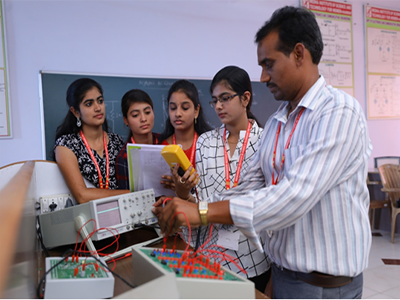
The Electronic Devices and Circuits Laboratory provides students with practical knowledge of fundamental electronic components and their behavior in different circuit configurations. This laboratory helps students understand the characteristics and operation of semiconductor devices used in electronic systems.
In this lab, students perform experiments on diodes, Zener diodes, Bipolar Junction Transistors (BJT), and Field Effect Transistors (FET) to study their voltage–current characteristics and operating regions. Students also design and analyze basic electronic circuits such as rectifiers, clippers, clampers, and transistor amplifier circuits.
Through these experiments, students learn concepts such as biasing techniques, signal amplification, and waveform shaping, which form the foundation for advanced electronic circuit design.
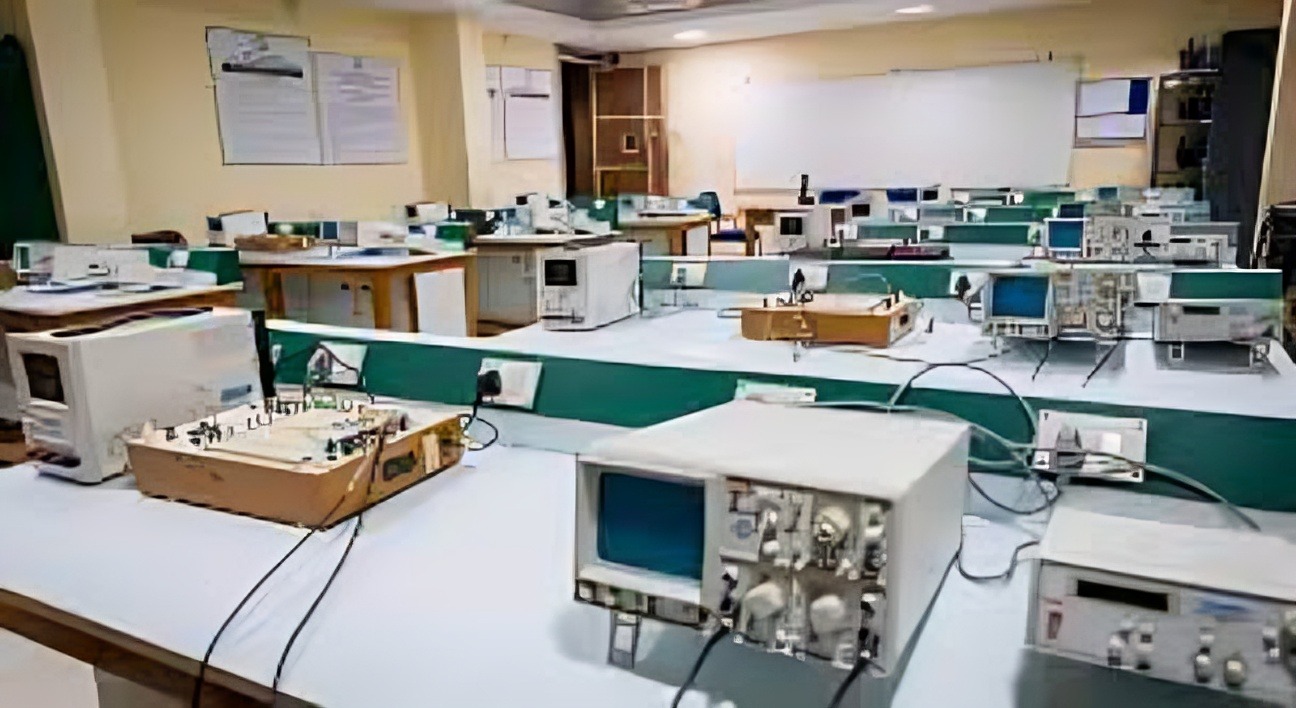
The laboratory is equipped with essential instruments including regulated power supplies, digital multimeters, cathode ray oscilloscopes (CRO), function generators, breadboards, and electronic component kits. These facilities enable students to assemble, test, and analyze circuits effectively.
This laboratory plays an important role in building a strong foundation in electronics, helping students develop practical skills required for further studies in electronic circuit design and communication systems.
ANALOG AND DIGITAL COMMUNICATIONS LAB
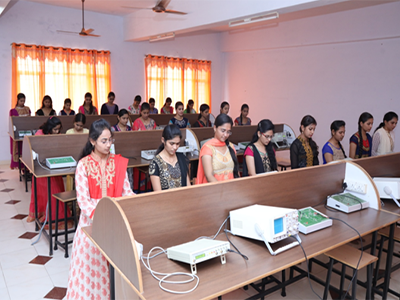
The Analog and Digital Communications Laboratory provides practical knowledge of the fundamental concepts and techniques used in modern communication systems. The laboratory helps students understand how information signals are transmitted, processed, and received using both analog and digital communication methods.
In this laboratory, students perform experiments related to amplitude modulation (AM), frequency modulation (FM), phase modulation (PM), pulse modulation techniques, and digital communication methods. These experiments enable students to analyze signal transmission, modulation and demodulation processes, noise effects, and signal recovery techniques.
Students also study various digital communication techniques such as pulse code modulation (PCM), delta modulation (DM), and time division multiplexing (TDM). Through hands-on experiments, they learn how analog signals are converted into digital form and transmitted efficiently in modern communication systems.
The laboratory is equipped with communication trainer kits, signal generators, oscilloscopes, spectrum analyzers, power supplies, and digital measuring instruments. These facilities allow students to design, test, and analyze communication circuits and signals effectively.
This laboratory plays a vital role in strengthening students’ understanding of communication engineering concepts and preparing them for advanced studies and applications in wireless communication, networking, and signal processing.
LINEAR IC APPLICATIONS LAB
The Linear and Digital IC Applications Laboratory provides students with practical exposure to the design and analysis of circuits using integrated circuits (ICs). This laboratory helps students understand the working principles and real-time applications of both analog and digital integrated circuits.
In this laboratory, students perform experiments using operational amplifiers, timers, voltage regulators, and digital ICs to design and analyze various electronic circuits. The lab enables students to study different applications of operational amplifiers such as inverting and non-inverting amplifiers, integrators, differentiators, active filters, comparators, and waveform generators.
Students also work with popular ICs such as IC 741 operational amplifier, IC 555 timer, and various digital logic ICs to develop practical circuits used in electronic systems. Experiments include the design of multivibrators, oscillators, voltage regulators, and digital logic circuits.
The laboratory is equipped with modern instruments including regulated power supplies, digital storage oscilloscopes, function generators, digital trainer kits, breadboards, and multimeters, which enable students to design, test, and analyze circuits effectively.
This lab plays a crucial role in strengthening students’ understanding of integrated circuit technology and its applications in modern electronic and communication systems.
MICROPROCESSORS AND MICROCONTROLLERS LAB
Overview
The Microprocessors and Microcontrollers Lab is dedicated to exploring the fundamentals and advanced concepts of microprocessor and microcontroller technology. This lab provides students with hands-on experience in designing, programming, and interfacing microcontroller-based systems.
Objectives
- To understand the architecture and functioning of various microprocessors and microcontrollers.
- To gain practical skills in assembly programming and high-level programming for microcontrollers.
- To develop proficiency in interfacing microcontrollers with external devices, including sensors and actuators.
- To foster problem-solving skills through project-based learning in embedded systems design.
Facilities and Equipment
- Microprocessor Kits: Equipped with Intel 8085/8086 microprocessor kits for architecture study and assembly programming exercises.
- Microcontroller Kits: Access to popular microcontroller platforms such as Arduino, PIC, and 8051 microcontrollers for practical applications.
- Development Tools: Software tools for simulation and programming including Keil, MPLAB, and Arduino IDE.
- Interfacing Modules: A variety of interfacing devices including LCDs, keypads, motors, and sensors to implement practical projects.
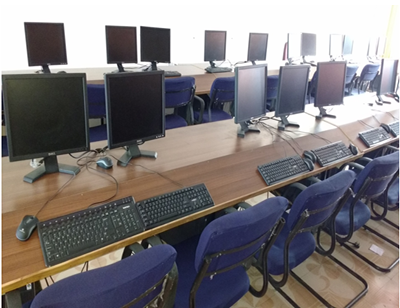
- Workstations: Dedicated workstations for students equipped with necessary software and tools.
Learning Outcomes
Upon completion of the Microprocessors and Microcontrollers Lab, students will be able to:
- Understand the role of microprocessors and microcontrollers in modern electronics.
- Write, debug, and optimize assembly and C code for microcontroller applications.
- Design and test microcontroller circuits using interfacing components effectively.
- Apply knowledge of embedded systems in real-world applications, preparing for careers in electronics and software development.
ANALOG ELECTRONICS /ELECTRONIC CIRCUIT ANALYSIS LAB
Overview
The Electronic Circuit Analysis Lab is designed to provide students with a comprehensive understanding of electronic circuits through hands-on experimentation and analysis. This lab focuses on both fundamental and advanced concepts of electronic components and circuit behavior.
Objectives
- To understand the basic principles of electronic circuits including Ohm's Law, Kirchhoff's Laws, and network theorems.
- To analyze and design various types of circuits including analog and digital circuits.
- To gain practical experience in using electronic components, measurement tools, and simulation software.
- To develop problem-solving skills in diagnosing and troubleshooting electronic circuits.
Facilities and Equipment
- Breadboards and Components: A variety of resistors, capacitors, inductors, diodes, transistors, and ICs available for circuit construction.
- Measurement Instruments: Access to oscilloscopes, multimeters, function generators, and power supplies for circuit testing and analysis.
- Simulation Software: Tools like Multisim, LTspice, and PSpice for circuit design and simulation, reinforcing theoretical knowledge.
- Workstations: Fully equipped workstations for individual and group activities, fostering a collaborative learning environment.
Learning Outcomes
Upon completion of the Electronic Circuit Analysis Lab, students will be able to:
- Analyze and design electronic circuits using fundamental principles and theorems.
- Construct and test circuits using a variety of electronic components and measurement tools.
- Utilize simulation software to model circuit behavior and predict performance.
- Demonstrate troubleshooting techniques and analyze circuit failures effectively.
VLSI AND E-CAD LAB
Overview
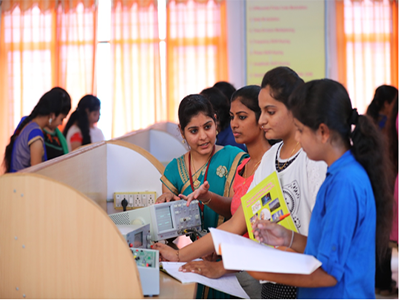
The VLSI and ECAD Lab is focused on the design, analysis, and implementation of integrated circuits using advanced tools and techniques. This lab equips students with critical skills necessary for careers in semiconductor technology, circuit design, and electronic systems.
Objectives
- To understand the principles of VLSI design and the processes involved in creating integrated circuits.
- To utilize ECAD tools for designing, simulating, and verifying electronic circuits and systems.
- To develop knowledge in various topics including digital design, layout design, and physical verification.
- To foster hands-on experience through projects that apply theoretical knowledge to real-world applications.
Facilities and Equipment
- Design Software: Access to leading ECAD tools such as Cadence, Mentor Graphics, and Synopsys for circuit design and simulation.
- Simulation Tools: Software for digital logic simulation, timing analysis, and functional verification of VLSI circuits.
- Workstations: High-performance computers equipped with the necessary software for design and analysis.
- Hardware Prototyping: Facilities for fabricating and testing prototype circuits to validate designs.
Learning Outcomes
Upon completion of the VLSI and ECAD Lab, students will be able to:
- Design and implement VLSI circuits using industry-standard tools and methodologies.
- Perform simulation and verification of circuit designs to ensure functionality and reliability.
- Understand the physical design process and its implications on circuit performance.
- Work collaboratively on design projects, preparing for teamwork in a professional setting.
DIGITAL SIGNAL PROCESSING AND BASIC SIMMULATION LAB
Overview
The Digital Signal Processing and Basic Simulation Lab focuses on the analysis, manipulation, and synthesis of signals in digital form. This lab provides students with a solid foundation in DSP concepts and the practical skills necessary for simulating various signal processing techniques.
Objectives
- To understand the principles of digital signal processing, including sampling, quantization, and filtering.
- To apply mathematical concepts and algorithms essential for analyzing and manipulating digital signals.
- To gain practical experience using simulation software and tools for implementing DSP algorithms.
- To develop problem-solving skills through projects and real-world applications in signal processing.
Facilities and Equipment
- Simulation Software: Access to tools such as MATLAB, Simulink, and Python libraries for DSP applications and simulations.
- Signal Processing Toolboxes: Specialized toolboxes for filtering, frequency analysis, and signal visualization.
- Workstations: Dedicated computers equipped with the necessary software for conducting experiments and simulations.
- Measurement Instruments: Tools for analyzing physical signals, such as oscilloscopes and spectrum analyzers.
Learning Outcomes
Upon completion of the Digital Signal Processing and Basic Simulation Lab, students will be able to:
- Analyze and process digital signals using fundamental DSP techniques.
- Implement and simulate various DSP algorithms using industry-standard software tools.
- Understand the impact of signal processing on real-world applications such as audio, image, and communication systems.
- Collaborate effectively on projects, enhancing teamwork and communication skills.
MICROWAVE AND OPTICAL COMMUNICATION LAB
Overview
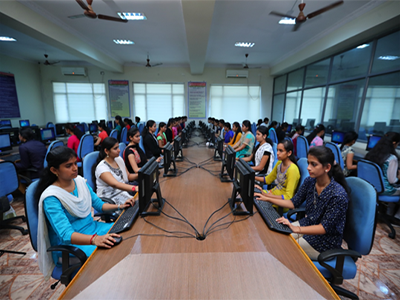
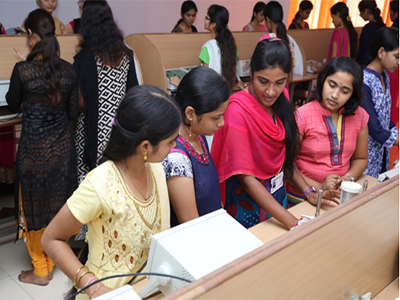
The Microwave and Optical Communication Lab focuses on the fundamental principles and applications of microwave and optical communication technologies. This lab provides students with an understanding of the critical role these technologies play in modern communication systems.
Objectives
- To explore the characteristics and propagation of microwave and optical signals.
- To understand the design and analysis of communication systems using microwave and optical components.
- To gain hands-on experience with laboratory equipment used for testing and measuring communication signals.
- To develop problem-solving skills through practical experimentation and project-based learning.
Facilities and Equipment
- Microwave Test Equipment: Access to vector network analyzers, spectrum analyzers, and oscilloscopes for microwave signal measurement and analysis.
- Optical Communication Kits: Equipment for testing fiber optics, including optical time-domain reflectometers (OTDR) and fiber optic sources.
- Simulation Software: Tools for modeling microwave and optical systems, such as MATLAB and specialized communication design software.
- Workstations: Dedicated spaces equipped with state-of-the-art tools for conducting experiments and simulations.
Learning Outcomes
Upon completion of the Microwave and Optical Communication Lab, students will be able to:
- Analyze and design microwave and optical communication systems using relevant principles and components.
- Utilize testing and measurement equipment to evaluate communication signals effectively.
- Implement simulations to predict the performance of microwave and optical systems.
- Work collaboratively on projects that address real-world communication problems.
DIGITAL SYSTEM DESIGN/DIGITAL ELECTRONICS LAB
Overview
The Digital Logic Design Lab is dedicated to the study and application of digital logic principles in creating and analyzing digital systems. This lab provides students with the practical skills necessary to design, develop, and test digital circuits.
Objectives
- To understand the fundamental concepts of digital logic design, including logic gates, combinational and sequential circuits.
- To develop skills in the use of hardware description languages (HDL) for circuit design and simulation.
- To gain hands-on experience in constructing and testing digital circuits using both simulation tools and physical components.
- To foster problem-solving abilities through projects and practical applications in digital design.
Facilities and Equipment
- Digital Circuit Components: A variety of logic gates, flip-flops, multiplexers, and other digital components for circuit construction.
- Simulation Software: Access to design tools such as Logisim, ModelSim, and Xilinx ISE for circuit simulation and synthesis.
- Measurement Instruments: Equipment including logic analyzers and oscilloscopes for testing and analyzing circuit behavior.
- Workstations: Fully equipped workstations for individual and group lab sessions.
Learning Outcomes
Upon completion of the Digital Logic Design Lab, students will be able to:
- Design and implement digital circuits using combinational and sequential logic.
- Utilize HDL for the simulation and synthesis of digital designs.
- Analyze and troubleshoot digital circuits using measurement tools and techniques.
- Work collaboratively on design projects, enhancing teamwork and communication skills.